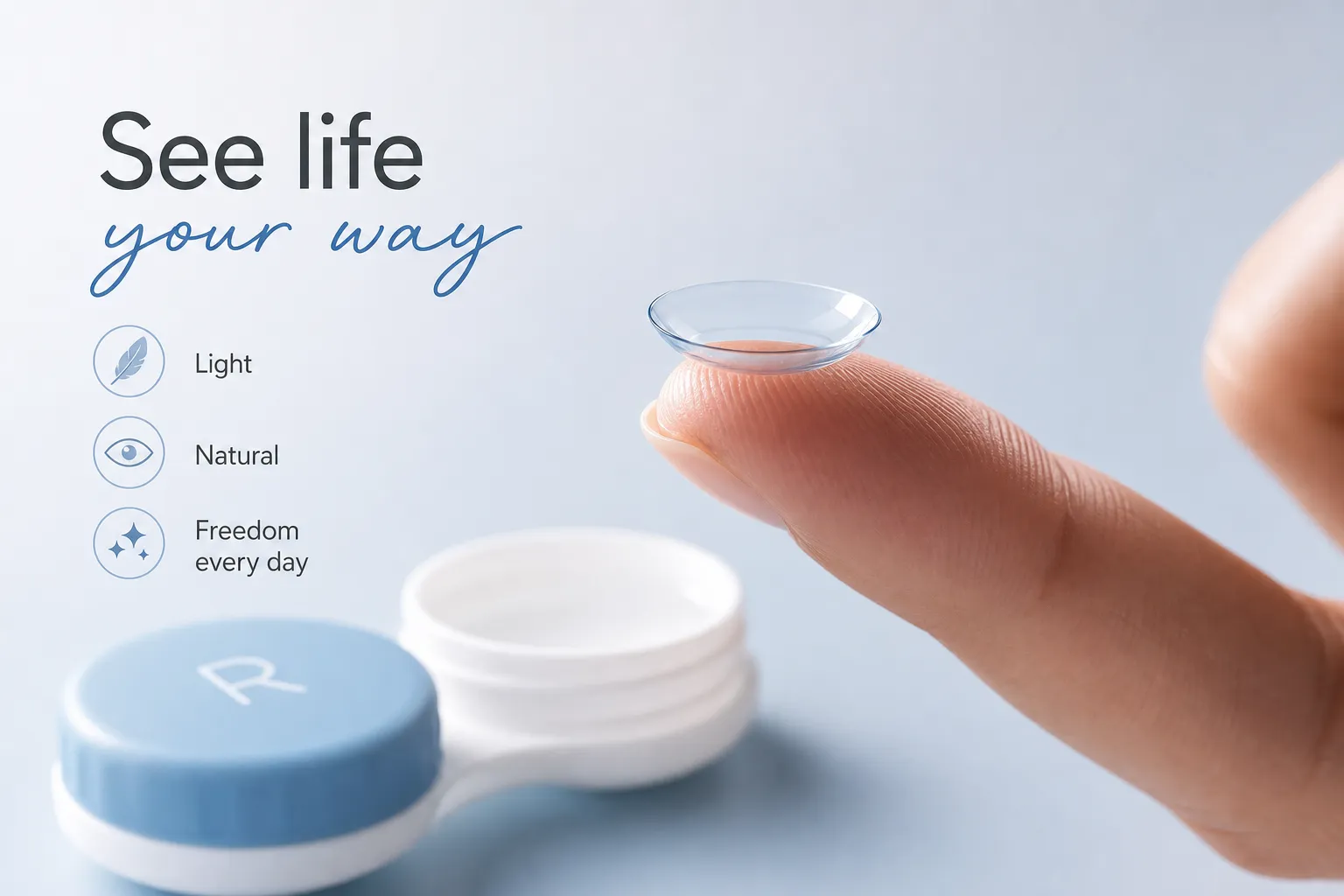
There is a quiet question that lives in the back of many spectacle wearers’ minds. Not a loud dissatisfaction, just a gentle curiosity: what would the world look like without frames around it? At EyeQ Optometrists, it is one of the most common conversations we have across our Cape Town locations, and it deserves a proper answer. If you have ever wondered why choose contact lenses over spectacles, the honest answer is that it depends entirely on your eyes, your lifestyle, and what you want from your vision. Contact lenses are not a universal upgrade, but for the right person, they genuinely change the experience of everyday life. This is an honest look at what contact lenses offer, what they require, and what a contact lens fitting actually entails, so you can decide whether it is worth finding out if they work for you.
What contact lenses offer that glasses simply can’t
The most immediate difference is optical. Because a soft lens sits directly on the eye and moves with it, your entire visual field opens up. There are no frames interrupting peripheral sight, no reflections cutting across lenses, no distortion at the edges of thick prescriptions. For people with higher prescriptions especially, this shift in visual quality is striking the first time they experience it.
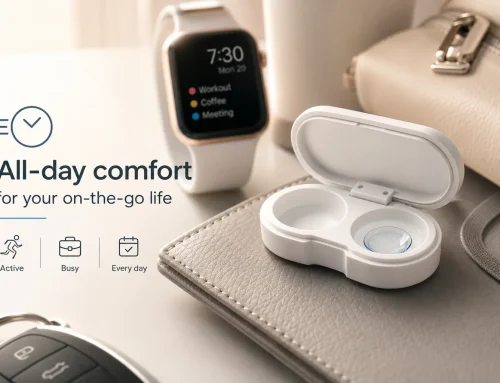
For active glasses wearers, the practical case for choosing contact lenses is equally strong. Glasses slip during a trail run, fog up on a cold morning, and create real risk during contact sport. Modern silicone hydrogel contact lenses stay put, stay clear in rain and humidity, and are compatible with cycling helmets, swimming goggles, and protective eyewear in ways that frames simply are not. Many Capetonians find that the outdoor lifestyle defining so much of their weekends, hiking, surfing, cycling, is simply easier without frames.
There is also a subtler advantage that many wearers do not anticipate until they experience it: the freedom to wear any sunglasses they choose. When your refractive error is corrected by contact lenses, an affordable pair of sunglasses does the job just as well as an expensive prescription pair. Many wearers also report something more personal, seeing their own face in the mirror without anything in the way. Not because glasses are unattractive, but because it is simply a different kind of seeing.
The risks worth understanding before you commit
Honest guidance requires acknowledging the risks. The most serious is microbial keratitis, a corneal infection that, left untreated, can threaten vision. The good news is that the numbers are genuinely reassuring – roughly two to four cases per 10,000 daily wearers per year. That is rare. The risk multiplies by 10 to 15 times with overnight wear, which is why compliance with removal schedules is very important.
Daily disposable contact lenses carry the lowest infection risk of any format, and modern silicone hydrogel materials have significantly reduced the hypoxia-related complications that plagued older soft contact lens designs. Most contact lens complications are not caused by the lens itself. They are caused by poor hygiene, sleeping in contact lenses not designed for overnight use, and ignoring the optometrist’s fitting advice.
Some people should not wear contact lenses at all. Severe dry eye disease, active conjunctivitis, blepharitis, certain corneal conditions, and work environments with heavy dust or chemical exposure are genuine contraindications. Mild dry eyes, however, do not automatically rule out contact lens wear.
The right contact lens material and wearing schedule can make a significant difference. That is exactly why a proper fitting consultation matters far more than anecdotal advice from friends or family. Their prescription, corneal shape, and eye health may be entirely different from yours.
Choosing the right type of lens for your eyes and lifestyle
The most common question when selecting contact lenses is daily versus monthly.
Daily disposable contact lenses
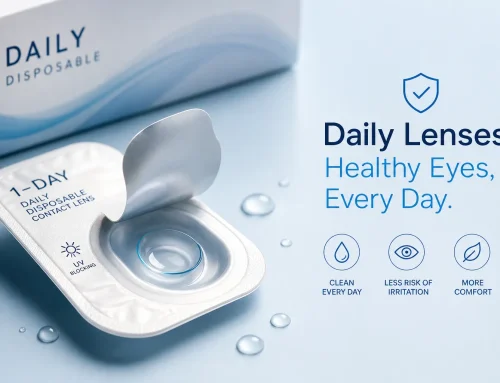
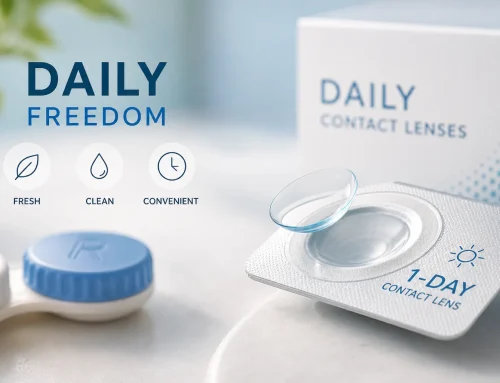
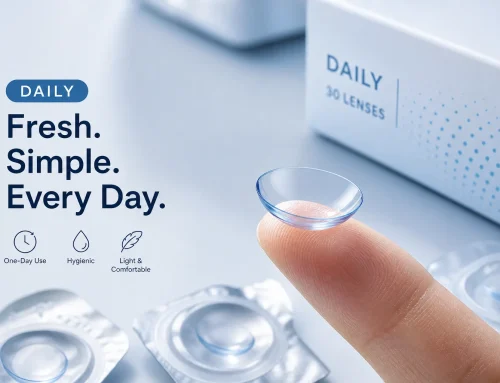
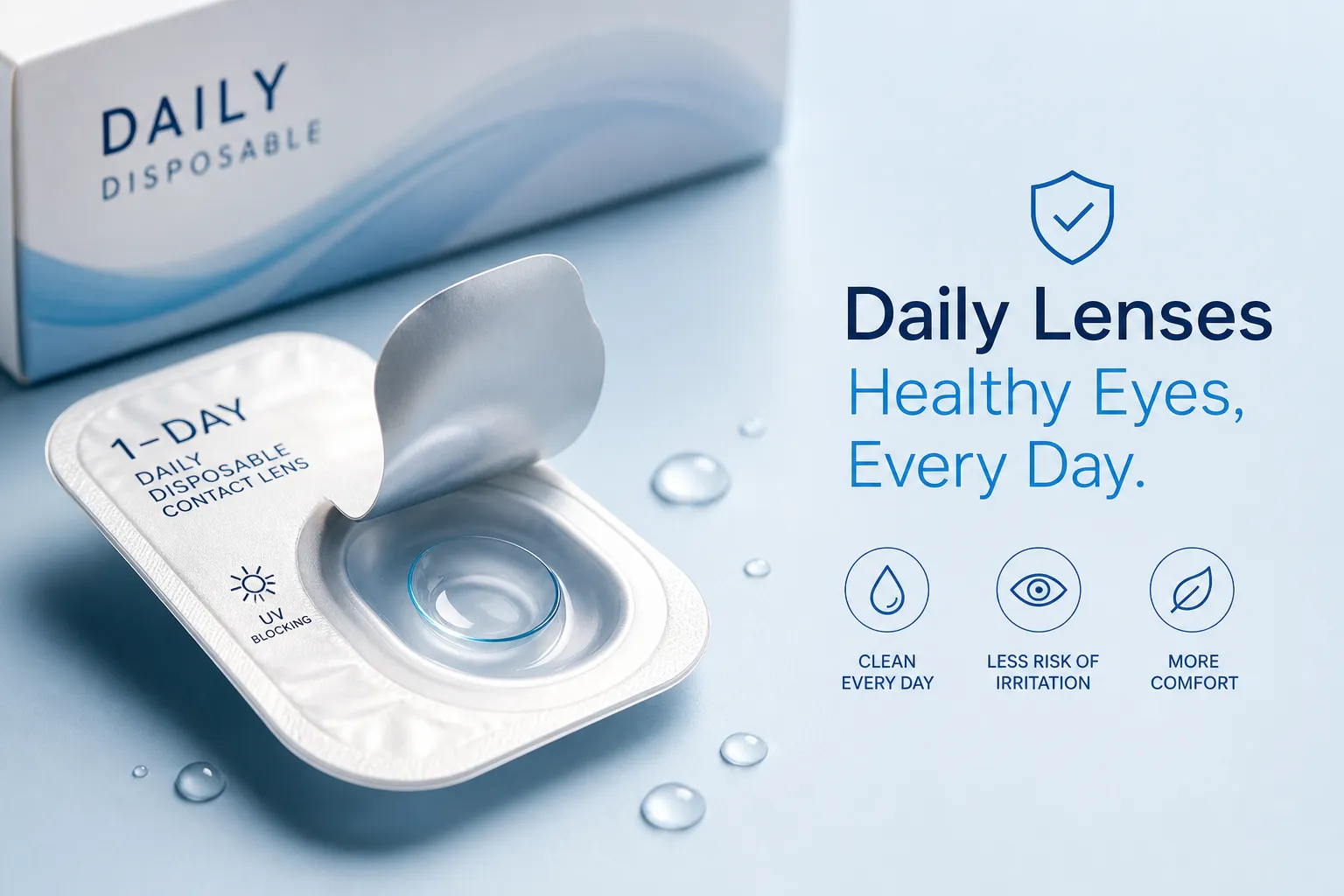
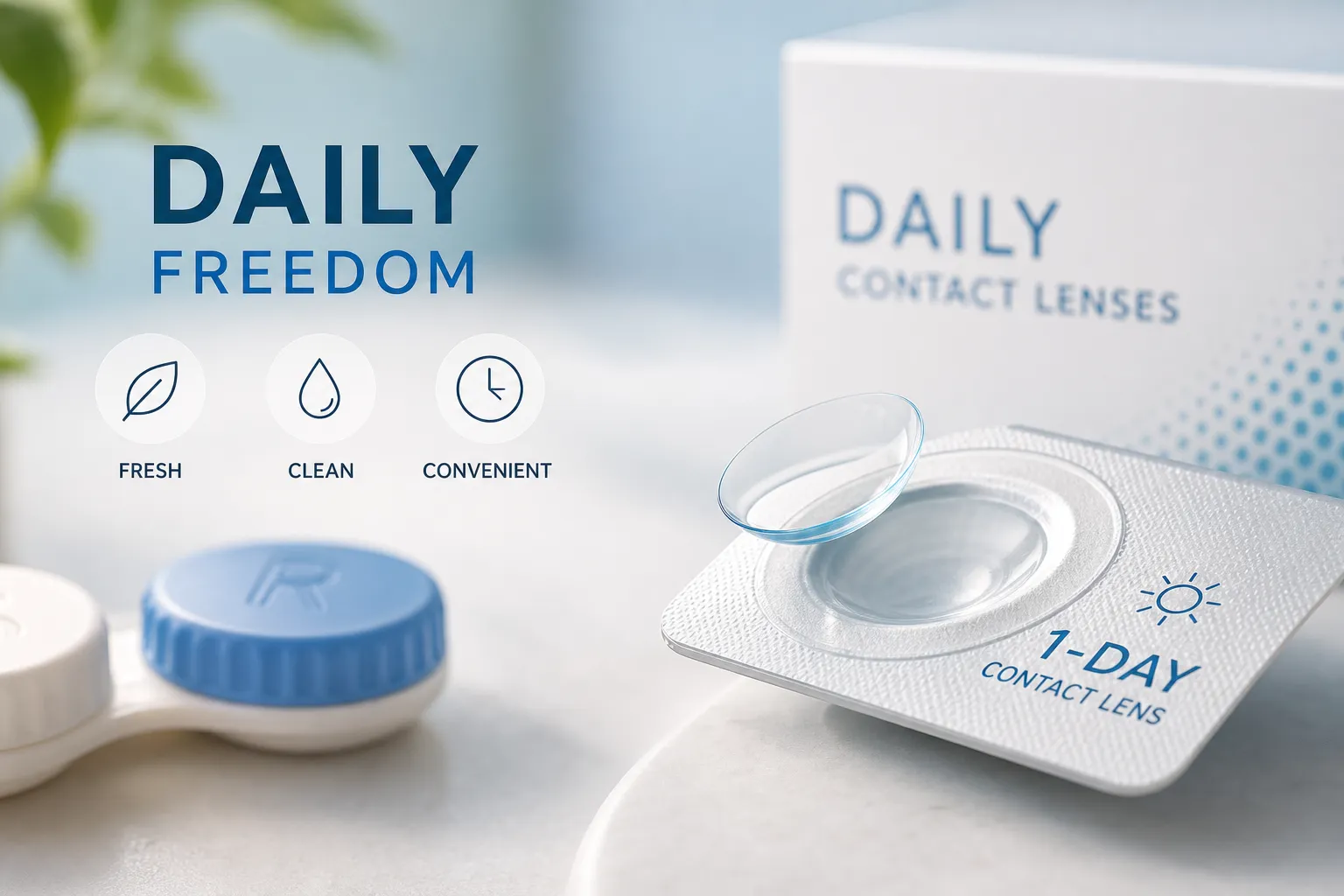
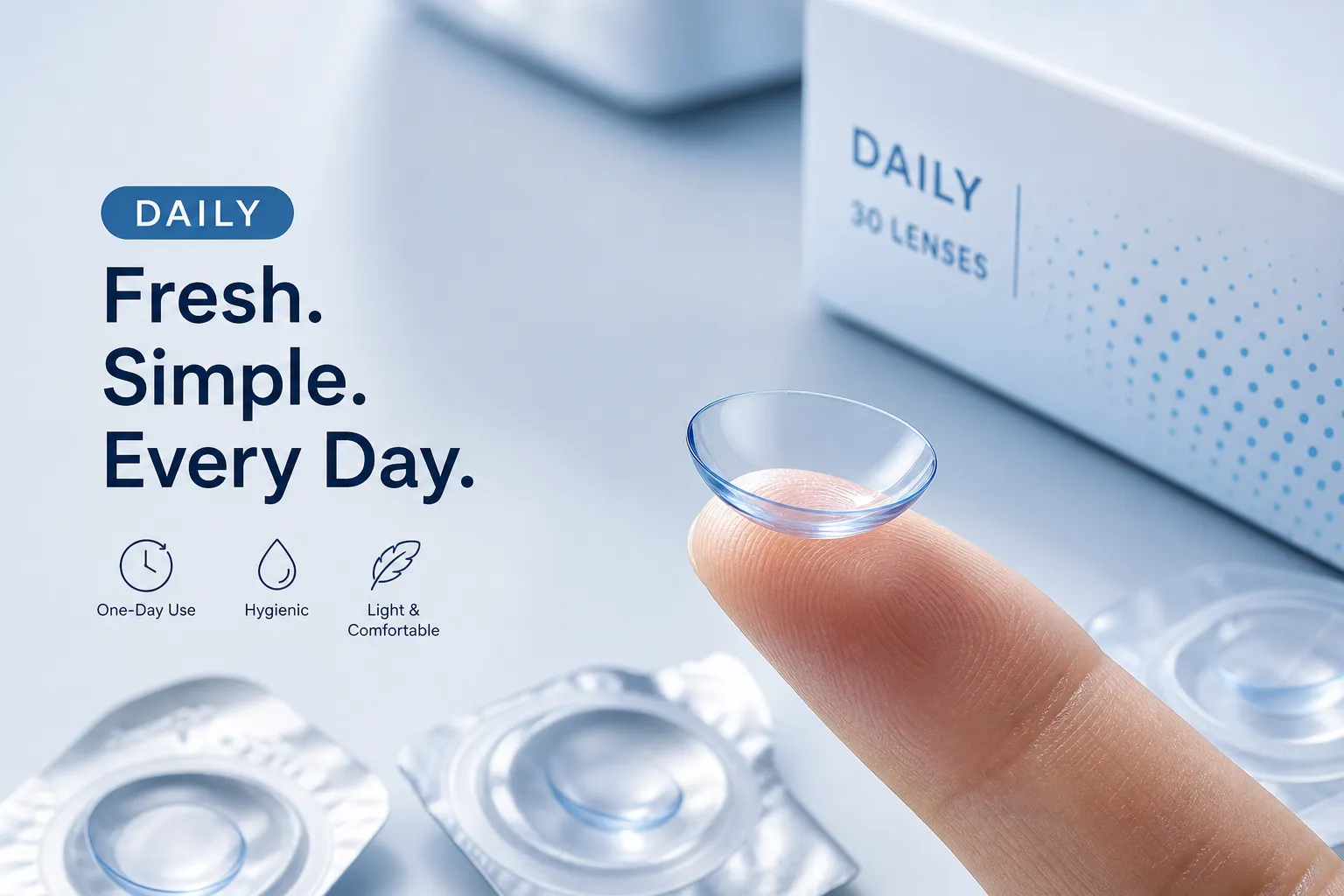
Daily disposable contact lenses are fresh each morning, require no cleaning solutions, and carry the lowest infection risk. They are especially suited to allergy sufferers, occasional wearers, and anyone who prefers simplicity over routine maintenance. The trade-off is cost – they are more expensive annually than monthly lenses.
Daily disposable contact lenses are the most convenient format and the easiest entry point for new contact lens wearers. No solutions, no storage cases, no nightly routine, just a fresh pair each morning.
Monthly contact lenses
Monthly contact lenses require more attention at the end of the day, with cleaning and disinfecting every night as well as storing the lenses in a clean, disinfected container. It therefore needs a disciplined contact lens wearer to avoid contracting infections or other side effects. The cost of the cleaning and storing solution should also be added to the overall cost of contact lens .
Although monthly disposable contact lenses require more commitment and more work, they do reduce the annual spend on contact lenses.
Specialist contact lens designs
Astigmatism does not prevent you from contact lens wear. Soft toric contact lenses handle mild to moderate astigmatism well and are available in both daily and monthly formats. For high astigmatism or irregular corneas such as keratoconus, rigid gas-permeable or scleral lens designs offer superior correction.
If you are over 40 and struggling to read up close, multifocal contact lenses can offer meaningful glasses-free living across multiple distances, though adaptation times and visual outcomes do vary from person to person, and an experienced fitting consultation is the best way to set realistic expectations.
What is required to get started
An eye examination is generally required before contact lenses are fitted. The optometrist will discuss which options are most suitable, specifically taking factors such as prescription, occupation and lifestyle into account.
A contact lens fitting will follow, as well as an instruction session to teach the correct use of the contact lenses, inserting, removing, cleaning and storage.
At EyeQ Optometrists, the full process happens under one roof: diagnostic examination, corneal measurements, trial lens fitting, and ongoing supply with the option of online reordering for repeat purchases.
The decision is yours, but you don’t have to guess
Contact lenses are not a universal improvement over glasses. For some people, glasses are the better daily tool. But for many wearers, the reasons to choose contact lenses come down to something straightforward: greater freedom of movement, clearer peripheral vision, and a life less interrupted by frames. The only way to know which side of that line you fall is to try contact lens wear, with a fitting designed around your specific eyes and lifestyle.
If you are based in or visiting Cape Town, book a contact lens fitting consultation at EyeQ Optometrists at Canal Walk, Cavendish Square, Tygervalley, or the V&A Waterfront. Come with your current prescription, be upfront about your daily habits, and let a qualified optometrist give you a clear, personalised opinion. That first appointment is where the real question, why choose contact lenses for your eyes specifically, finally gets answered.